
Every year, thousands of people are diagnosed with lung cancer without ever smoking. The hidden cause? Radon gas.
This invisible threat can build up inside your home without any warning. You won’t see it, smell it, or feel it—but long-term radon exposure can seriously damage your lungs.
That’s why experts consider radon lung cancer risk one of the most dangerous environmental threats in homes.
In this guide, you’ll learn why radon causes lung cancer, how it affects your body, and how to protect your home.
What is Radon Gas?
Quick Answer:
Radon is a radioactive gas formed from the natural decay of uranium in soil and rock. It enters homes through cracks and builds up to dangerous levels.
Radon gas enters through:
- Foundation cracks
- Construction joints
- Pipe gaps
- Basement floors
Because radon in homes is invisible, most people never detect it without testing.
[Image: radon entering basement diagram]
Search keywords: radon gas entering house diagram, basement crack radon illustration, soil gas infiltration home
Nano Banana prompt: “cutaway house diagram showing radon gas entering through foundation cracks, labeled airflow arrows, clean infographic style”
Why Radon Causes Lung Cancer
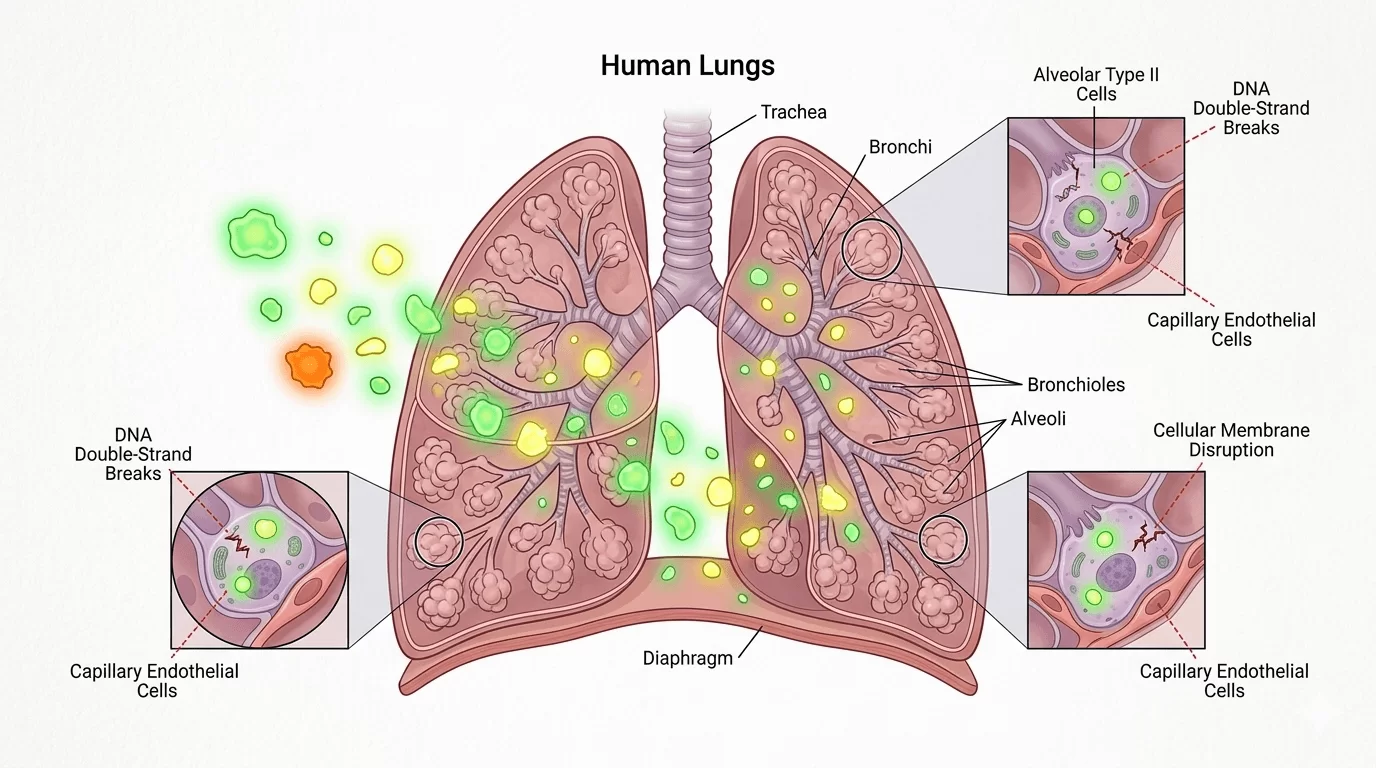
Radon is dangerous because it releases radiation inside your body.
How it works:
- Radon breaks into radioactive particles
- You inhale these particles
- They get trapped in your lungs
- Radiation damages lung cell DNA
- Over time → cancer develops
This is why radon exposure leads to lung cancer risk.
Health Risks of Radon Exposure
The Biggest Risk: Lung Cancer
- 21,000+ deaths per year in the U.S.
- #1 cause of lung cancer among non-smokers
No Early Symptoms
- No smell
- No visible signs
- No early warning
By the time symptoms appear, the damage is already serious.
Radon + Smoking = Extreme Risk
If someone smokes, radon becomes even more dangerous.
- Risk increases 20–25x
- Smoking weakens lung defense
- Radon particles stay longer in lungs
This combination dramatically increases lung cancer risk from radon.
Why Radon is a Hidden Danger in Homes
Radon is dangerous because:
- Invisible, odorless, tasteless
- Builds slowly over time
- Present in any home
- Varies house to house
Even neighboring homes can have very different radon levels.
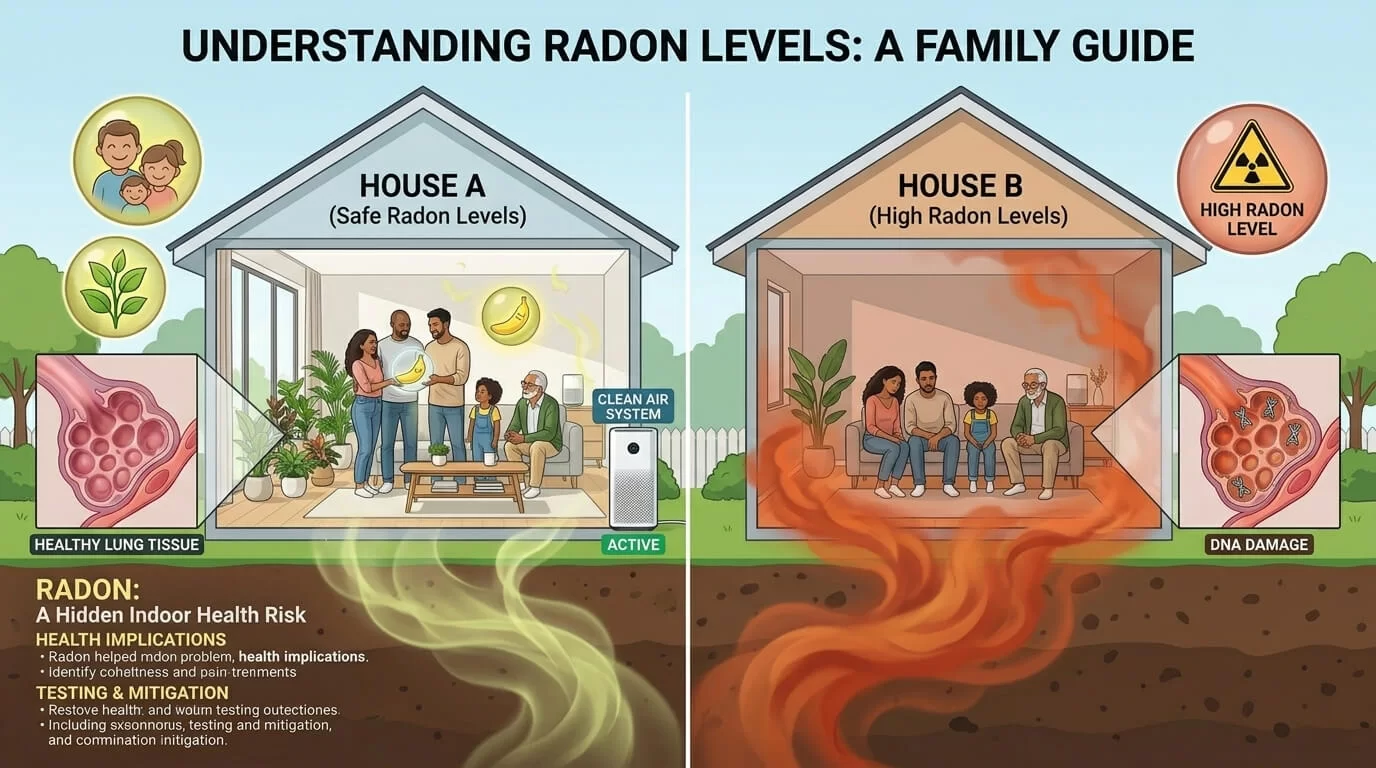
Why Radon is High in Michigan, Indiana & Kentucky
Radon risk is especially high in these states.
Geology
- Michigan & Indiana: uranium-rich soil
- Kentucky: limestone & shale
EPA Zones
- Indiana: Zone 1 & 2
- Michigan: 1 in 4 homes affected
- Kentucky: high radon-prone areas
Chimney Effect
Cold weather traps air → pulls radon inside homes.
This leads to consistently high radon levels.
How to Test Radon at Home
DIY Testing
- Short-term kits
- Long-term kits
- Affordable
Professional Testing
- More accurate
- Faster results
- Best for high-risk homes
The only way to detect radon gas is through testing.

How Radon Mitigation Works
A radon mitigation system removes radon safely.
How it works:
- Pipe system under foundation
- Fan pulls radon gas
- Gas vented outside
This process can reduce radon levels up to 99%.
Already Have a System? It May Need Repair
Common problems:
- Fan failure
- Poor installation
- Pipe leaks
A faulty system means radon exposure can return.