
Direct answer:
A radon mitigation system is a venting system that reduces radioactive radon gas levels in a home. It uses a pipe and fan to draw gas from beneath the foundation and release it safely outside. The most common method is sub-slab depressurization.
Why Every Homeowner Must Understand Radon Mitigation
Radon is a naturally occurring radioactive gas that comes from the breakdown of uranium in soil. It seeps into homes through cracks in foundations, gaps around pipes, sump pumps, and even crawlspace openings. The U.S. Environmental Protection Agency (EPA) estimates that radon causes about 21,000 lung cancer deaths each year, making it the second leading cause of lung cancer after smoking. For non-smokers, radon exposure is the number one environmental cause of cancer mortality. Because radon is invisible, odorless, and tasteless, the only way to detect dangerous levels is through testing. If your home tests at or above 4.0 pCi/L (picoCuries per liter), a radon mitigation system is not optional — it is a health necessity. This guide explains exactly what these systems do, how they work, what they cost, and when to call a certified professional.
How a Radon Mitigation System Works (Step-by-Step)
- 1 Suction pit — A hole drilled through the concrete floor slab.
- 2 PVC piping — Runs from the pit up through the home or exterior wall.
- 3 Radon fan — A continuous-duty fan pulls gas upward (50–200 watts).
- 4 Exhaust vent — Gas releases above the roofline and dissipates safely.
Active vs. Passive Radon Mitigation Systems
There are two fundamental types of radon systems. Passive systems rely on natural convection — hot air rising — to draw radon out. They are typically installed only during new construction and require no electricity. However, studies show passive systems often fail to reduce radon below 4.0 pCi/L in high-risk areas. Active systems, which include a continuously running electric fan, are far more reliable and are the standard for existing homes. The table below summarizes the differences.
| Feature | Passive System (Pipe only) | Active System (Pipe + Fan) |
|---|---|---|
| Installation timing | New construction only (embedded in slab) | New or existing homes |
| Energy use | Zero | 50–200 watts ($2–$5/month) |
| Average radon reduction | 30–50% | 85–99% (typically below 2.0 pCi/L) |
| EPA recommendation | Not for elevated levels | Yes — preferred method |
For any home testing above 2.7 pCi/L, most certified mitigators recommend an active system. The extra cost of the fan is minimal compared to the health protection it provides.
Core Components of a Radon System (Detailed)
Understanding each component helps homeowners monitor system health and recognize potential failures.
| Component | Detailed Purpose |
|---|---|
| Suction pit (under-slab cavity) | Creates a low-pressure zone beneath concrete; gravel backfill improves airflow. |
| Schedule 40 PVC vent pipe | Rigid, gas-tight pipe that carries radon vertically; resists weather and UV if installed outdoors. |
| Inline radon fan | Runs continuously, rated for 5–15 years. Common brands: Festa, RadonAway, Fantech. |
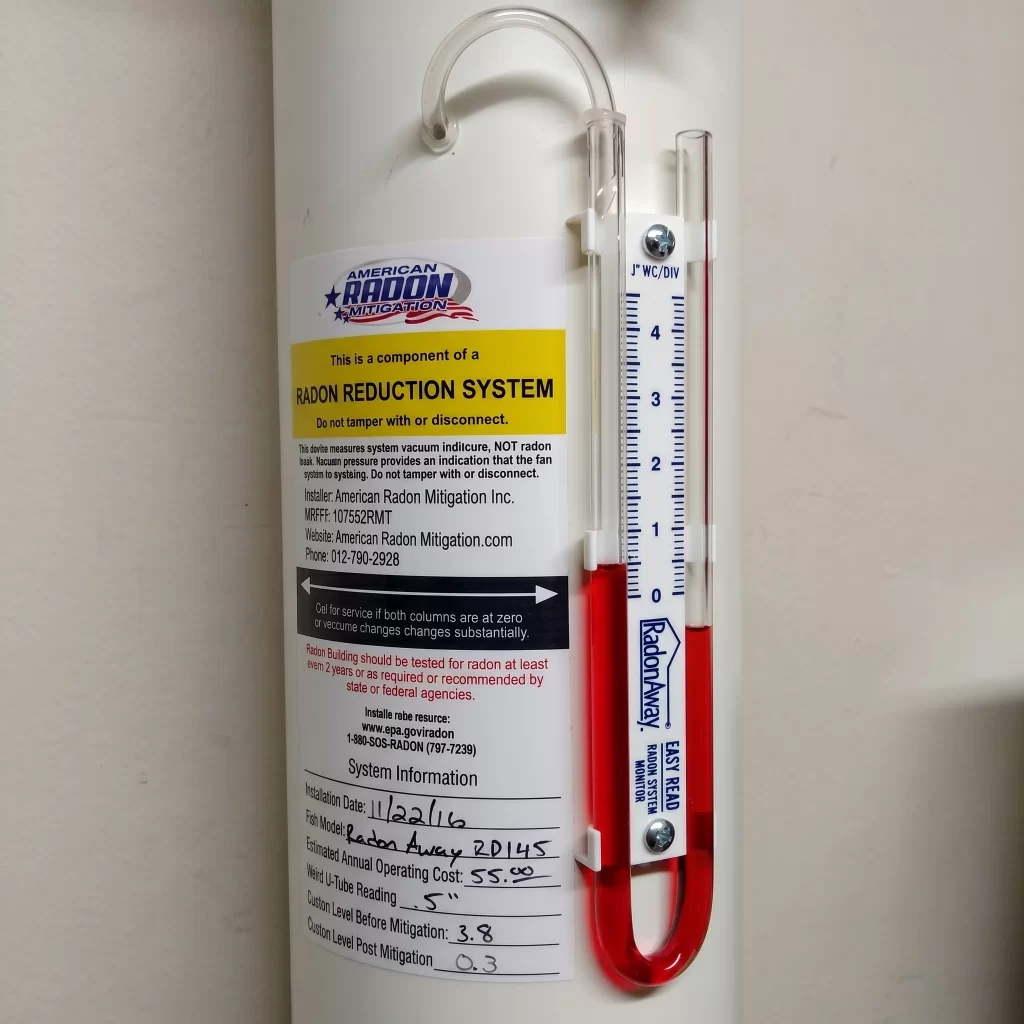
| U-tube manometer | Clear plastic tube with colored liquid; uneven liquid = suction active. If level, fan has failed. |
| Roof flashing & vent cap | Prevents rain, debris, and animals from entering pipe while allowing gas to escape. |
| Foundation sealing materials | Polyurethane caulk and hydraulic cement seal cracks, expansion joints, and penetrations. |
How Much Does a Radon Mitigation System Cost? (2026 Pricing)
Professional installation costs vary based on home size, foundation type (basement, slab-on-grade, crawlspace), number of suction points, and local labor rates. As of 2026, average pricing breaks down as:
- Single suction point (typical basement or slab): $800 – $1,200
- Complex foundation (crawlspace + basement mix): $1,200 – $1,800
- Commercial or large home (multiple fans/suction pits): $1,800 – $3,000
- Post-installation radon test: Usually included or $100–$150
The fan itself costs between $200 and $400, and electricity to run it 24/7 adds roughly $2 to $5 per month. Most homeowners find the total investment far lower than the health risk or the loss in property value from an unmitigated radon problem. Many states also offer financing or grant programs for radon mitigation — check your local health department.
Do Radon Mitigation Systems Run All the Time?
Yes — active systems are designed for continuous, 24/7 operation. The fan must maintain constant negative pressure under the foundation; if the fan stops, radon levels will return to pre-mitigation levels within 12 to 24 hours. Do not put the fan on a timer or switch. Modern radon fans are engineered for long-term duty cycles and have sealed bearings that require no maintenance except eventual replacement after 5–12 years.
How Long Do Radon Fans Last? & Replacement Signs
Quality fans typically last 5 to 10 years, with premium units reaching 12–15 years. Environmental factors like extreme cold, dust, or improper installation can shorten lifespan. Homeowners should visually check the manometer once a month. Warning signs of fan failure include:
- Manometer liquid level is equal on both sides (no suction)
- Unusual grinding or rattling noise from the fan
- Increased radon levels on a retest (above 2.0 pCi/L)
- The pipe feels warm (some fans indicate failure by overheating or stopping)
When a fan fails, a certified radon professional can replace it in under an hour. Warranties on new installations (such as Epic Radon Solutions’ 5-year warranty) usually cover fan replacement parts.
Can I Install My Own Radon Mitigation System? (DIY vs Pro)
In theory, a skilled homeowner can purchase a radon fan and PVC pipe and attempt installation. However, mistakes are common and costly. Improper fan sizing (too small = no suction; too large = can pull moisture or even collapse crawlspace vapor barriers) is the #1 error. Other frequent DIY problems: pipe routing through living spaces which can leak radon back indoors, failing to seal foundation cracks, incorrect vent height (less than 12 inches above roofline violates code), and no post-installation verification test. Without a certified professional, you also void the chance for a warranty and may fail real estate disclosure requirements. For the $800–$1,500 professional cost, the assurance of NRPP-certified work and guaranteed results below 4.0 pCi/L is well worth it.
Does a Radon System Reduce Humidity? (Important Clarification)
No — radon mitigation systems are designed exclusively for soil gas (radon, VOCs, and other vapors). They are not dehumidifiers. In fact, in very humid climates or during summer months, a radon system might draw slightly more moisture from beneath the slab, but this effect is minimal. To control basement humidity, use a dedicated dehumidifier. Some professionals integrate a condensate bypass or drain tee, but that does not reduce humidity levels significantly.
Common Questions About Radon Systems
The EPA recommends action at 4.0 pCi/L or higher.
A plastic vapor barrier is laid over soil. A pipe pulls air from beneath the barrier.
Minimal. Check the manometer monthly. Retest radon every 2 years. Replace fan every 5–10 years.
Yes if radon levels are elevated. It lowers lung cancer risk and increases home resale value.
The technical name for the most common radon mitigation method.
Step-by-Step Professional Installation
- 1 Test radon levels first
- 2 Drill a 5-inch hole through the slab
- 3 Dig a small suction pit beneath the hole
- 4 Insert 3–4 inch PVC pipe into the pit
- 5 Run pipe up through interior garage or exterior wall
- 6 Install a continuous-duty radon fan in attic or outside
- 7 Vent pipe above roofline, away from windows
- 8 Seal all cracks in the foundation floor
- 9 Install a U-tube manometer on the pipe
- 10 Retest radon levels after 24 hours
If your home tests at 4.0 pCi/L or higher, you need a radon mitigation system. Testing is inexpensive and widely available through hardware stores or certified professionals.
If you live in Michigan or Indiana and need a certified radon professional:
Epic Radon Solutions
✔ NRPP-certified • Family-owned • 15+ years experience
Proudly serving Detroit, Grand Rapids, Ann Arbor, Lansing, Fort Wayne, South Bend — and communities across all of Michigan & Indiana
Final Homeowner Checklist for Radon Safety
Follow these essential steps to test, reduce, and maintain safe radon levels in your home.
Test your home for radon. Every home should be tested, especially basements and lower levels.
Check results. If levels are 4.0 pCi/L or higher, action is recommended.
Contact a certified professional. Request a licensed radon mitigation expert.
Get a free estimate and install a system. Most radon mitigation systems are installed in 1 day.
Verify results after installation. Perform a post-mitigation radon test.
Maintain your system. Check the manometer monthly for proper operation.
Retest regularly. Every 2 years or after major home changes.
Replace fan when needed. Typically every 5–10 years.
Radon is a naturally occurring gas and a leading cause of lung cancer in non-smokers. Testing is the only way to know your risk.
Why Homeowners Trust Epic Radon Solutions
- ✔ Certified radon professionals
- ✔ Local experts in MI, IN & KY
- ✔ Fast, accurate service
- ✔ Affordable solutions
Protect your home from dangerous radon — safe, simple, and effective.
Services: Radon Testing • Mitigation • System Repair
Serving Michigan, Indiana & Kentucky