
When people think about indoor air quality, they usually think about dust, mold, or ventilation. But one of the most dangerous threats is completely invisible—radon gas.
This naturally occurring gas can silently build up inside your home, reducing indoor air quality and increasing long-term health risks. You won’t see it, smell it, or notice it—but it could already be affecting the air your family breathes every day.
In this guide, you’ll learn how radon impacts indoor air quality, why it’s dangerous, and how to protect your home.
What is Radon Gas?
Quick Answer:
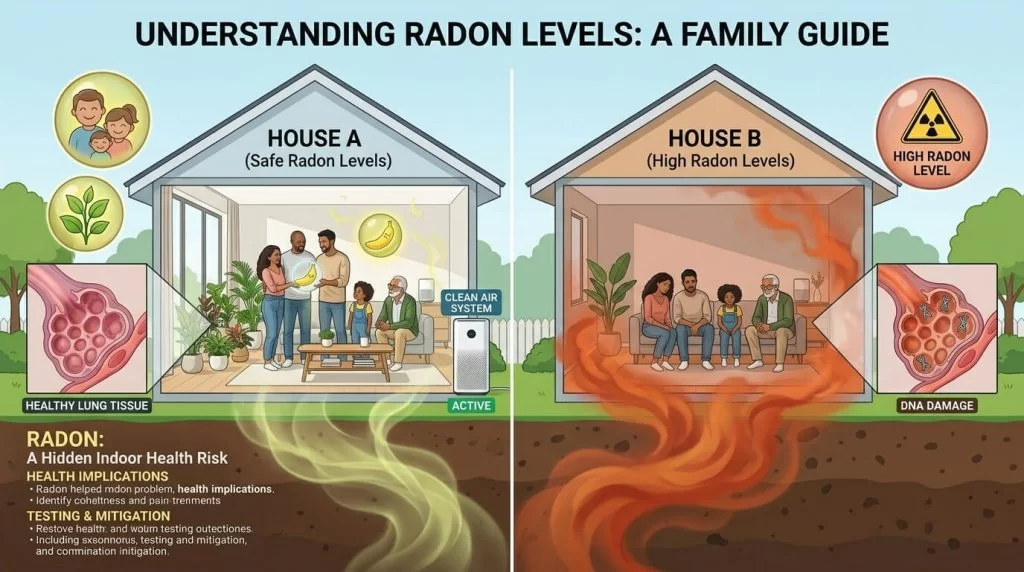
Radon is a colorless, odorless radioactive gas formed from the natural decay of uranium in soil and rock. It enters homes through cracks and openings, where it accumulates and affects indoor air quality.
Radon enters through:
- Foundation cracks
- Basement floors
- Construction joints
- Sump pumps
Because radon in homes is invisible, most homeowners never detect it without proper testing.
How Radon Impacts Indoor Air Quality
Radon directly reduces indoor air quality (IAQ) by introducing radioactive particles into the air.
Key Impacts:
1. Accumulation Indoors
- Radon is heavier than air
- Settles in basements and lower levels
- Builds up in enclosed spaces
2. Air Becomes Unsafe
- Outdoor radon is diluted
- Indoor levels can be 4–10x higher
- Turns normal air into a health hazard
3. Invisible Air Pollution
- No smell or color
- No immediate symptoms
- Long-term exposure risk
This makes radon one of the most dangerous forms of home air pollution.
How Radon in Air Damages Your Health
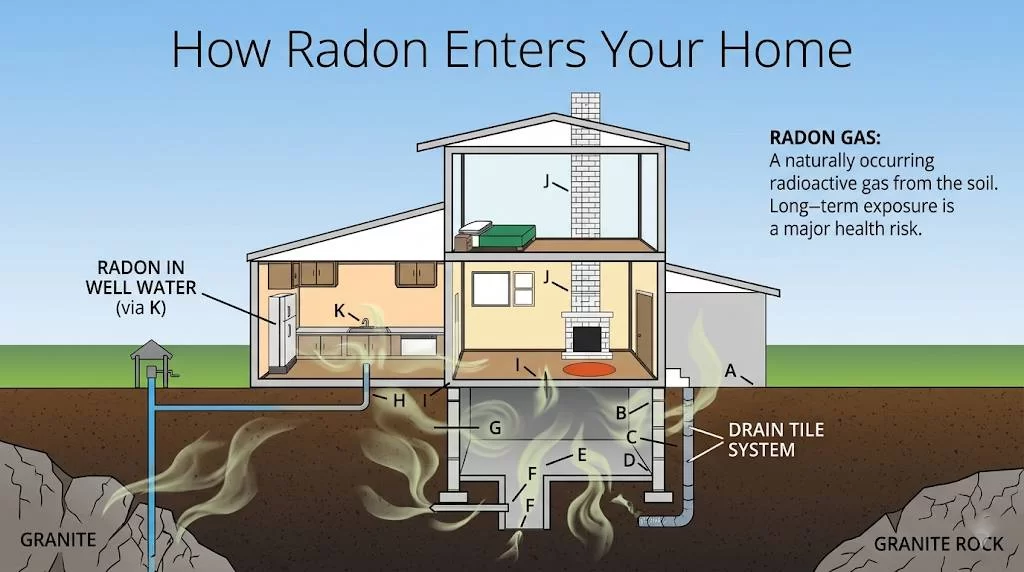
Radon doesn’t just affect air—it directly affects your lungs.
What Happens When You Breathe It:
- Radon particles attach to dust and air molecules
- You inhale them into your lungs
- They release alpha radiation
- Lung tissue gets damaged over time
This increases lung cancer risk from radon exposure.
Important:
- No early symptoms
- Damage happens silently
Why Radon is More Dangerous Indoors
Radon exists naturally outdoors, but it becomes dangerous indoors.
Indoor vs Outdoor
- Outdoor: low concentration, safe
- Indoor: trapped and concentrated
Why It Builds Up
- Poor ventilation
- Sealed homes
- Energy-efficient construction
This is why radon air quality problems are mainly an indoor issue.
Radon Air Quality Problems in Michigan, Indiana & Kentucky
Radon significantly impacts indoor air quality in these regions.
- ~25% homes above 4.0 pCi/L
- Major indoor air pollutant
- Up to 1 in 3 homes affected
- High radon zones statewide
- Average levels around 7.4 pCi/L
- Above EPA-recommended levels
These states have some of the highest radon-related IAQ risks.
Why Homes in These States Are at Risk
- Uranium-rich soil and rock
- Basements and crawl spaces
- Poor ventilation systems
- Cold climates trapping indoor air
These factors increase radon levels in homes.
How to Test Radon and Check Air Quality
Testing is the only way to detect radon.
Options:
- DIY radon test kits
- Professional radon testing
EPA Guidelines:
- Take action at 4.0 pCi/L
- Consider action at 2.0–4.0 pCi/L
Regular radon testing is essential for safe indoor air.
How Radon Mitigation Improves Air Quality
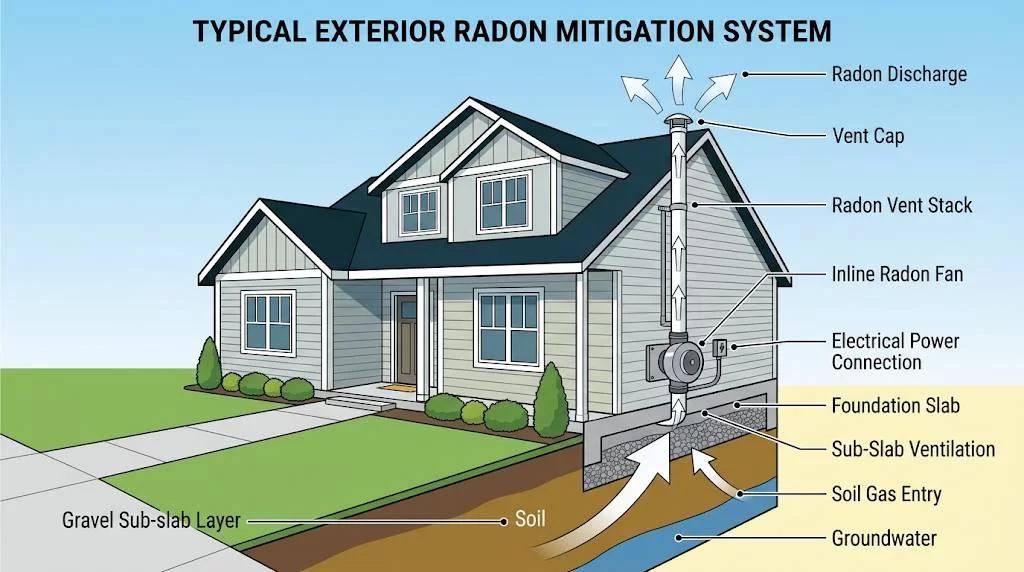
A radon mitigation system removes radon gas from your home.
How It Works:
- Pipe system under foundation
- Fan pulls radon gas
- Gas vented outside safely
This significantly improves indoor air quality.
Already Have a System? Check It
Even existing systems can fail.
Common issues:
- Fan not working
- Pipe leaks
- Poor installation
A faulty system means radon exposure can return.