

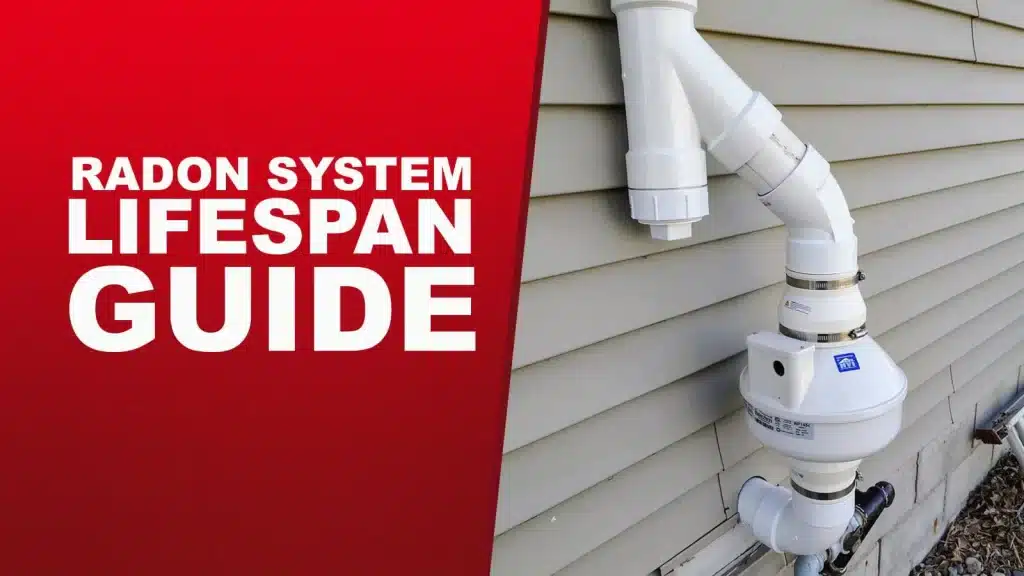
How Long Does a Radon Mitigation System Last?
A radon mitigation system can last 20 years or more, but the system’s lifespan depends almost entirely on one component: the radon fan. The fan typically needs replacement every 5 to 10 years, while the PVC piping and foundation seals can last decades with minimal attention.
This guide breaks down the expected lifespan of every major component, explains what causes premature failure, and shows you how to spot the warning signs before your radon levels creep back up.
Radon System Lifespan: The Short Answer
A properly installed radon mitigation system has an average lifespan of 20 years or more[citation:19]. However, this figure describes the system as a whole — not the individual parts. The distinction matters because most homeowners will replace at least one fan during that 20-year period.
Think of it like a furnace. The ductwork and housing might last 30 years, but the motor and moving parts wear out sooner. Radon systems work the same way: the passive components are built to last, while the mechanical component (the fan) is designed to be serviceable and replaceable.
Key distinction: When people ask “how long does a radon system last,” they’re usually asking two different questions — how long until the whole system needs replacement, and how long until something needs servicing. The answers are 20+ years and 5-10 years, respectively.
Component-by-Component Lifespan Breakdown
Understanding which parts fail first helps you budget for maintenance and recognize when a small repair is enough versus when a larger replacement is due.
| Component | Expected Lifespan | What to Watch For |
|---|---|---|
| Radon fan (inline) | 5 – 10 years[citation:10][citation:13] | Noise, vibration, manometer reading zero |
| PVC piping | 50 – 100 years[citation:19] | Cracks, loose joints, ice blockage in cold climates |
| Foundation seals | 10 – 20 years | Visible gaps, decreased suction |
| U-tube manometer | 10 – 20 years | Discoloration, fluid loss, stuck reading |
| System alarm / monitor | 5 – 10 years[citation:19] | False alarms, error codes, dead display |
Why the Fan Wears Out First
The radon fan runs 24 hours a day, 365 days a year. That’s roughly 8,760 hours of continuous operation annually. The motor bearings, impeller, and electrical components experience constant wear that no other part of the system faces. Manufacturers typically warrant their fans for 5 years, which reflects the realistic expectation that the fan is the system’s primary wear item[citation:6][citation:18].
What Determines How Long Your System Lasts?
Two identical radon systems installed on the same day can have very different lifespans. Several factors accelerate wear or extend service life.
| Factor | Impact on Lifespan | Why It Matters |
|---|---|---|
| Installation quality | High | Poorly sealed systems work harder and fail sooner[citation:19] |
| Fan location | High | Attic heat and outdoor weather exposure shorten fan life[citation:19] |
| Climate conditions | Medium–High | Freeze-thaw cycles cause ice blockages in exterior piping[citation:4] |
| Power stability | Medium | Frequent outages and surges stress the fan motor[citation:3] |
| Maintenance frequency | Medium | Annual inspections catch small issues before they become failures |
In Michigan and Indiana, the climate presents specific challenges. Exterior-mounted fans and above-roof discharge pipes face freeze-thaw cycles that can create ice blockages inside the vent stack[citation:4]. A partially blocked stack forces the fan to work harder to maintain suction, accelerating motor wear. Fans installed in unconditioned attics also face temperature swings that shorten their service life compared to fans housed in conditioned spaces[citation:19].
The Hidden Cost of Ignoring Maintenance
A fan that’s struggling against a partial blockage doesn’t just fail sooner — it also uses more electricity and provides less suction. The system may still show a reading on the manometer, giving homeowners false confidence that everything is fine. This is why annual professional inspections matter more than simply glancing at the U-tube.
Warning Signs Your System Is Failing
Radon systems rarely fail suddenly without warning. Most give signals weeks or months before radon levels actually rise. Recognizing these signs lets you schedule replacement before your indoor air quality is compromised.
| Warning Sign | What It Likely Means | Urgency |
|---|---|---|
| Manometer shows zero or no fluid difference | Fan has stopped or lost suction | Immediate — test radon now |
| Grinding, rattling, or humming noises | Motor bearings failing or impeller damage[citation:10] | High — schedule replacement |
| Fan is silent but power is on | Motor has seized | Immediate |
| Frequent breaker trips | Electrical fault in fan motor[citation:10] | High — fire risk potential |
| Visible cracks or ice on exterior pipe | Blockage or structural failure[citation:4] | High — inspect immediately |
| Radon test shows rising levels | System not maintaining suction | Immediate — full diagnostic needed |
The most reliable indicator is the U-tube manometer, the clear tube with colored fluid mounted on the pipe. Under normal operation, the fluid levels are uneven, showing that suction exists. If the fluid levels equalize, the fan isn’t pulling air. Check this visual indicator monthly — it takes five seconds and can alert you to a failure before radon levels rise.
EPA guidance: The fact that the fan is operating does not mean it is operating properly[citation:4]. A running fan with a blocked pipe or failed seal can still leave your home unprotected.
Maintenance Checklist to Maximize Lifespan
Radon systems require minimal maintenance, but a few simple habits can add years to the system’s life and catch problems early.
Look at the U-tube on the pipe. The fluid levels should be uneven, indicating suction. If they’re equal, the fan isn’t working. This is the single most important homeowner check.
Grinding, rattling, or a change in the fan’s normal hum indicates motor wear. A fan that’s getting louder is a fan that’s getting closer to failure[citation:10].
Before winter, check for cracks, loose joints, or signs of ice buildup. In cold climates, exterior stacks can freeze partially or completely, blocking exhaust flow[citation:4].
Even a system that appears to be working can lose effectiveness. Retesting every two years confirms the system is still keeping levels below 4.0 pCi/L[citation:15].
A certified technician can check seals, measure actual suction, inspect the fan’s electrical connections, and catch issues that aren’t visible to homeowners.
These steps take less than 30 minutes per year combined and can prevent premature system failure. The most expensive radon system is the one that fails silently while you believe it’s protecting your home.
Radon Fan Replacement: Cost and Timing
When the fan fails or loses efficiency, replacement is the standard fix. Unlike a full system replacement, fan replacement reuses all existing piping, seals, and roof penetrations.
| Service | Typical Cost | What It Includes |
|---|---|---|
| Fan unit (part only) | $150 – $400[citation:5] | Replacement fan matching system specs |
| Professional fan replacement | $300 – $600 installed[citation:5] | Fan, labor, sealing, post-install verification |
| Full system replacement | $900 – $1,500[citation:5] | New fan, piping, seals, and installation |
Fan replacement is one of the least expensive home maintenance tasks relative to its importance. For $300–$600, you restore full radon protection for another 5–10 years. Compare that to the cost of a new system, which requires new piping, sealing, and labor.
Should You Replace the Fan Yourself?
Technically possible, but not recommended. The replacement fan must match the system’s required suction and airflow characteristics. An undersized fan won’t maintain adequate vacuum; an oversized fan wastes energy and may be noisy. The electrical connection must be properly sealed and grounded, and the pipe coupling must be airtight. Most importantly, a professional will retest after installation to confirm the system is actually working[citation:5].
When to Repair vs. Replace the Whole System
Not every problem requires a full system replacement. Understanding the difference between a component failure and a system failure saves money and avoids unnecessary work.
| Situation | Recommended Action | Why |
|---|---|---|
| Fan is dead, piping is intact | Replace fan only | Piping and seals have decades of life remaining |
| Manometer shows no suction, fan runs | Diagnose first | Could be fan, seal failure, or blockage — not always the fan |
| Radon levels rose significantly | Full diagnostic | System may need redesign, not just repair |
| Multiple component failures | Consider full replacement | Repair costs approach replacement costs |
| System is 20+ years old with rising levels | Full replacement evaluation | Original design may no longer match home conditions |
In most cases, the piping outlasts everything else. PVC pipe can last up to 100 years[citation:19], and properly sealed foundation penetrations can hold for decades. When a system fails, the problem is almost always the fan or a seal — not the entire infrastructure.
Frequently Asked Questions
How long does a radon mitigation system last?
A radon mitigation system can last 20 years or more[citation:19]. The PVC piping may last 50 to 100 years, but the radon fan — the system’s only moving part — typically needs replacement every 5 to 10 years[citation:10][citation:13]. With proper maintenance and timely fan replacement, the overall system can serve your home for decades.
How long does a radon fan last?
Most radon fans last between 5 and 10 years under continuous operation[citation:10][citation:13]. Some manufacturers rate their fans for 7 to 10 years, while others suggest 5 to 10 years depending on installation conditions. Fans installed in attics or outdoors may have shorter lifespans due to temperature extremes[citation:19].
What are the signs that my radon fan needs replacement?
Key warning signs include unusual grinding, rattling, or humming noises from the fan; a manometer showing zero pressure difference; frequent circuit breaker trips; visible cracks or damage to the fan housing; and rising radon levels on a retest[citation:10]. If the fan is silent but power is on, the motor has likely seized and needs immediate replacement.
Does a radon mitigation system need regular maintenance?
Yes, though maintenance is minimal. Check the U-tube manometer monthly to confirm suction, listen for unusual fan noises, and inspect exterior piping seasonally for cracks or ice blockage. Professional inspections every 2 to 3 years are recommended, and radon retesting every 2 years confirms the system is still working[citation:15].
How much does radon fan replacement cost?
A replacement radon fan typically costs $150 to $400 for the part alone, or $300 to $600 professionally installed[citation:5]. This is significantly less than a full system replacement ($900 to $1,500) because the existing piping, seals, and roof penetration are reused.
Can I replace a radon fan myself?
While technically possible for a handy homeowner, professional replacement is recommended. The fan must match the system’s required suction and airflow specifications, the electrical connection must be safe and properly sealed, and post-installation testing is needed to confirm the system is working. An improperly matched fan may fail to reduce radon levels[citation:5].
Why does my radon fan run but radon levels are still high?
A running fan doesn’t guarantee proper suction. The problem could be a failed seal allowing air to leak into the system, a blockage in the piping (often ice in cold climates), a fan that has lost efficiency, or sub-slab communication changes. A professional diagnostic can identify whether the issue is the fan, the piping, or the system design[citation:4].
Does cold weather affect radon system lifespan?
Yes. In cold climates like Michigan and Indiana, exterior piping can experience ice blockage when moisture in the soil gas condenses and freezes inside the vent stack[citation:4]. This forces the fan to work harder, accelerating wear. Fans installed outdoors or in unconditioned attics also face temperature extremes that shorten their lifespan compared to indoor installations[citation:19].
How often should I retest my home for radon after mitigation?
Retest every 2 years to confirm your system is still keeping radon levels below the EPA action level of 4.0 pCi/L[citation:15]. Also retest after any major home renovation, foundation work, or if you notice signs of system failure. A system that worked perfectly five years ago may have lost effectiveness.
What is the warranty on a radon fan?
Most radon fan manufacturers offer a 5-year warranty on their fans[citation:6][citation:18]. Some higher-end models may have longer warranties. Epic Radon Solutions backs every system we install with a 5-year warranty and guarantees radon levels remain below 4.0 pCi/L. Keep your installation paperwork — warranty claims typically require proof of purchase and professional installation.
Conclusion
A radon mitigation system can protect your home for 20 years or more, but that protection depends on maintaining the fan. The fan is the system’s only moving part and the only component designed for periodic replacement. Budget for a new fan every 5 to 10 years, check your manometer monthly, and retest radon every 2 years to confirm the system is working.
The piping and seals that make up the rest of the system are built to last decades. When something fails, it’s almost always the fan — and replacing it costs a fraction of what a new system would. The key is catching the failure early, before radon levels rise and your family’s exposure increases.
Next step: If your radon fan is over 7 years old, making unusual noises, or your manometer shows no suction, call Epic Radon Solutions at (800) 403-8460. We’ll diagnose the issue, replace the fan if needed, and verify your system is keeping radon below 4.0 pCi/L. Our team has serviced over 5,000 systems across Michigan and Indiana.