
Direct answer:
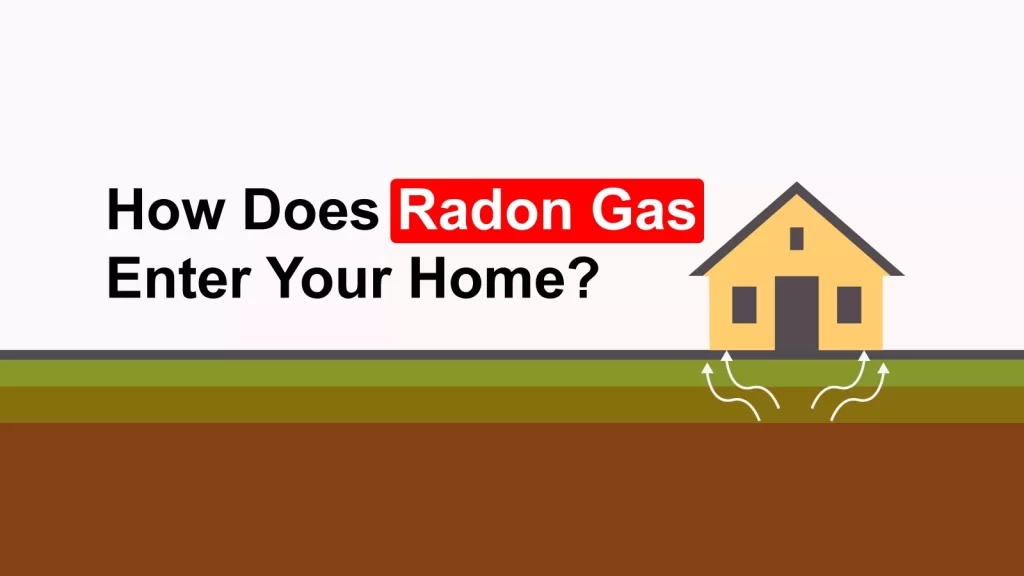
Radon gas enters homes through openings in the foundation, including cracks in concrete floors and walls, gaps around pipes, construction joints, sump pits, crawl spaces, and sometimes private well water. Because indoor air pressure is often lower than the pressure beneath your home, radon can be pulled from the soil into your living space. The only way to know your home’s radon level is through professional testing.
Introductions
Many homeowners ask:
“How does radon gas enter my home if I cannot see, smell, or feel it?”
The answer is simple: radon enters through small openings between your home and the ground beneath it.
Radon is a naturally occurring radioactive gas created when uranium breaks down in soil, rock, and groundwater. As it moves through the ground, it can enter buildings through foundation openings and accumulate indoors.
According to the Environmental Protection Agency (EPA), radon is the second leading cause of lung cancer in the United States. Because it cannot be detected without testing, many homeowners live with elevated radon levels without knowing it.
Understanding where radon enters your home is the first step toward protecting your family.
What Causes Radon to Enter a Home?
Your home naturally creates a slight vacuum effect.
Warm indoor air rises and escapes through small openings. This creates lower air pressure inside the home compared to the soil beneath the foundation.
As a result, the home can pull soil gases—including radon—through available pathways.
Think of your home like a straw pulling air upward from the ground.
6 Common Ways Radon Gas Enters Your Home
1. Foundation Cracks
Concrete may look solid, but small cracks can develop over time.
Common locations include:
- Basement floors
- Foundation walls
- Concrete slabs
- Expansion joints
Even small openings can allow radon gas to move from soil into your home.
Solution:
Foundation sealing can help reduce entry points, but sealing alone is usually not enough for elevated radon levels. A properly designed mitigation system is often required.
2. Gaps Around Pipes and Utility Lines
Homes require openings for:
- Water pipes
- Gas lines
- Electrical wiring
- Plumbing connections
The spaces around these utilities can create direct pathways for radon.
Solution:
Seal openings as part of a complete radon reduction strategy.
3. Construction Joints
Construction joints are areas where building materials connect.
Examples:
- Floor-to-wall joints
- Slab connections
- Foundation seams
Over time, these areas may develop small gaps where radon can enter.
4. Sump Pits
Sump pits help control groundwater, but an uncovered sump opening can also allow soil gases into your basement.
Solution:
- Install an airtight sump cover
- Connect mitigation systems properly when needed
5. Crawl Spaces
Homes with crawl spaces may have exposed soil beneath the structure.
Radon can move from the soil into the crawl space and then into the living areas above.
The most common solution is:
Submembrane depressurization
This involves:
- Installing a durable vapor barrier
- Creating suction beneath the membrane
- Venting radon safely outdoors
6. Private Well Water
In some areas, groundwater can contain dissolved radon.
When water is used for:
- Showering
- Cooking
- Washing dishes
radon can be released into indoor air.
This is generally a smaller source compared with soil-based radon entry.
Radon Entry Points Comparison Table
| Entry Point | How Radon Enters | Recommended Action |
|---|---|---|
| Foundation cracks | Gas moves through concrete openings | Seal + mitigation evaluation |
| Pipe gaps | Openings around utilities | Seal openings |
| Construction joints | Small foundation gaps | Professional assessment |
| Sump pits | Open soil connection | Airtight sump cover |
| Crawl spaces | Exposed soil gases | Submembrane system |
| Well water | Dissolved radon release | Water treatment evaluation |
Are There Warning Signs of Radon?
Unlike many home problems, radon does not create visible warning signs.
You cannot:
- Smell it
- See it
- Taste it
The only reliable way to know your home’s radon level is testing.
When Should You Test Your Home for Radon?
You should consider testing if:
✓ Your home has never been tested
✓ You recently purchased a home
✓ You are selling your property
✓ You finished a basement
✓ You completed renovations
✓ Your neighbor has elevated radon
✓ You installed a new HVAC system
Radon Testing Options
Short-Term Testing
Duration:
2–90 days
Best for:
- Real estate transactions
- Quick screening
Long-Term Testing
Duration:
90+ days
Best for:
- Understanding average exposure
Professional Radon Testing
Benefits:
- Certified equipment
- Accurate measurements
- Documentation
- Expert recommendations
What Radon Levels Require Action?
| Radon Level | Recommendation |
|---|---|
| Below 2 pCi/L | Continue periodic testing |
| 2–4 pCi/L | Consider reducing levels |
| 4 pCi/L or higher | EPA recommends mitigation |
Myth vs Fact: Common Radon Misconceptions
| Myth | Fact |
|---|---|
| Only old homes have radon | Any home can have radon |
| New homes are safe | New construction can also have radon |
| You can smell radon | Radon has no smell |
| Opening windows fixes radon | Ventilation only provides temporary reduction |
| Basements are the only concern | Any occupied level can be affected |
How Do You Reduce Radon in Your Home?
Step 1: Test Your Home
Testing identifies whether mitigation is necessary.
Step 2: Identify Entry Points
A professional evaluates:
- Foundation type
- Soil conditions
- Existing openings
- Home design
Step 3: Install a Radon Mitigation System
The most common system is:
Active Sub-Slab Depressurization
It works by:
- Creating suction beneath the foundation
- Collecting radon gas
- Moving it through a pipe system
- Exhausting it safely outdoors
These systems can significantly reduce indoor radon levels when properly designed and installed.
Common Questions About Radon Systems
No. Opening windows may temporarily lower indoor radon concentrations, but levels typically return when normal conditions resume.
Yes. Radon can affect old homes, new homes, large homes, and small homes.
Short-term tests can provide results quickly, while long-term tests provide a better average measurement.
Testing every two years is commonly recommended, and additional testing should be considered after renovations or HVAC changes.
Yes. Properly installed systems can greatly reduce radon levels.
If you live in Michigan or Indiana and need a certified radon professional:
Epic Radon Solutions
✔ NRPP-certified • Family-owned • 15+ years experience
Proudly serving Detroit, Grand Rapids, Ann Arbor, Lansing, Fort Wayne, South Bend — and communities across all of Michigan & Indiana
Why Homeowners Trust Epic Radon Solutions
- ✔ Certified radon professionals
- ✔ Local experts in MI, IN & KY
- ✔ Fast, accurate service
- ✔ Affordable solutions
Protect your home from dangerous radon — safe, simple, and effective.
Services: Radon Testing • Mitigation • System Repair
Serving Michigan, Indiana & Kentucky