
Direct answer:
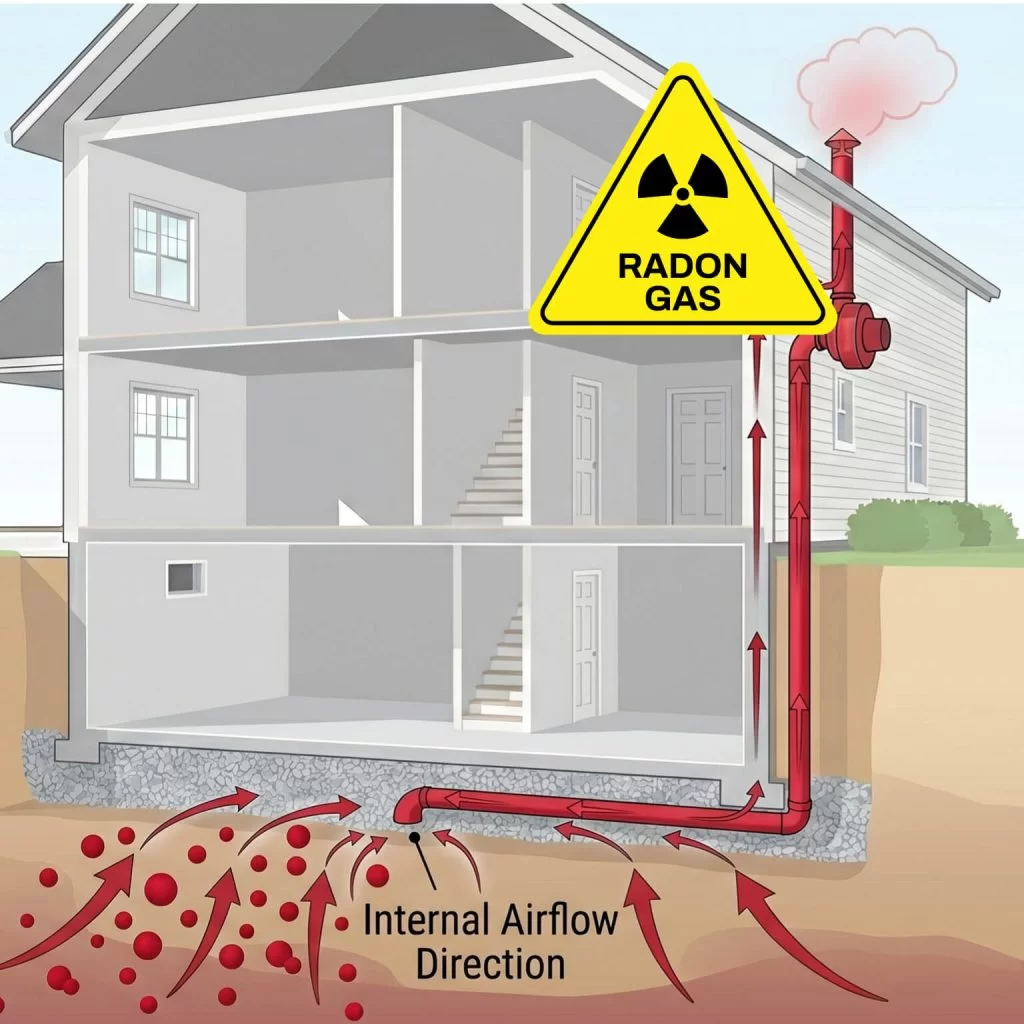
A radon mitigation system works by using a specialized ventilation system to create a vacuum beneath your home’s foundation. This prevents harmful radon gas from seeping into your living space. Instead, the system draws the gas out from the ground and safely exhausts it outside.
What is a Radon Mitigation System?
A radon mitigation system is a home safety setup designed to reduce radon gas levels inside buildings. It mainly uses a method called Active Soil Depressurization (ASD), which prevents radon from entering your living space.
The system creates a controlled suction area under the foundation. This suction collects radon gas from the soil and moves it through a pipe system to the outside air, where it disperses safely.
Instead of trying to block every crack in the foundation, the system changes air pressure dynamics so radon naturally flows away from the home.
Why Radon Mitigation Matters
Radon is invisible, odorless, and tasteless, making it impossible to detect without testing. Long-term exposure increases health risks, especially in poorly ventilated homes.
Key benefits of mitigation include:
- Reduces indoor radon levels significantly
- Lowers long-term health risks
- Improves indoor air safety
- Increases property value in many regions
- Provides continuous 24/7 protection
Because radon enters through soil beneath homes, mitigation is the only reliable long-term solution.
How a Radon Mitigation System Works (Step-by-Step)
1. Creating Suction Under the Foundation
A small hole is drilled in the basement slab or foundation. This becomes a suction point where soil gas is collected.
2. Activating Negative Pressure
A continuously running radon fan creates a vacuum beneath the home. This changes pressure so radon moves toward the pipe instead of entering the house.
3. Collecting Soil Gas
Radon and other soil gases are pulled into the suction point and directed into a sealed PVC piping system.
4. Venting Safely Outside
The gas travels through pipes and is released above the roofline, where it disperses harmlessly into the atmosphere.
5. Preventing Re-Entry
Because the system maintains lower pressure under the home, radon is blocked from re-entering living spaces.
Key Components of a Radon Mitigation System
1. Suction Point
This is the entry point where soil gas is collected from beneath the foundation.
2. PVC Vent Pipe
A durable pipe system transports radon gas from below the house to outside air.
3. Radon Fan
A specialized fan runs continuously to maintain suction and airflow.
4. Manometer
A simple pressure gauge that confirms the system is working properly.
5. Sealing Materials
Cracks and openings are sealed to improve system efficiency and airflow control.
Types of Radon Mitigation Systems
Different homes require different solutions based on foundation type.
Sub-Slab Depressurization
Best for concrete slab foundations. It is the most common and effective method.
Drain Tile Depressurization
Uses existing drainage systems around the foundation for improved airflow.
Sump Pit Depressurization
Uses sealed sump pits as suction points in basements.
Crawlspace Systems
A plastic vapor barrier is installed over soil to block radon entry.
Common Questions About Radon Systems
Radon mitigation systems can reduce indoor radon levels by up to 90–99% when properly installed. Their performance depends on soil conditions, foundation type, and correct system design.
Yes, most systems run continuously. Radon gas is always present in soil, so the system must operate 24/7 to maintain safe indoor levels.
The PVC piping can last decades, while the fan typically lasts 5–10 years before replacement is needed.
Most systems are quiet because the fan is installed in a garage, attic, or exterior area. Indoor noise is usually minimal.
It is possible, but not recommended. Proper design requires pressure testing and correct fan selection for reliable results.
If you live in Michigan or Indiana and need a certified radon professional:
Epic Radon Solutions
✔ NRPP-certified • Family-owned • 15+ years experience
Proudly serving Detroit, Grand Rapids, Ann Arbor, Lansing, Fort Wayne, South Bend — and communities across all of Michigan & Indiana
Best Practices for Effective Mitigation
Follow these essential guidelines to ensure your radon mitigation system works efficiently and safely.
Install the system based on foundation type.
Ensure proper sealing of slab openings.
Place the fan in an unconditioned space (such as attic or garage).
Use a manometer to monitor system performance.
Re-test radon levels after installation.
Schedule periodic inspections for long-term safety.
Proper system design is more important than complexity—correct installation ensures long-term radon reduction.
Common Mistakes to Avoid
Avoid these common errors to ensure your radon mitigation system performs effectively.
Relying only on sealing cracks instead of proper mitigation systems.
Using undersized or low-power fans.
Improper pipe routing that reduces airflow efficiency.
Ignoring pressure testing during installation.
Skipping post-installation radon testing.
A poorly designed system can significantly reduce effectiveness and fail to lower radon levels safely.
Conclusion
Radon mitigation systems work by changing how air moves under your home, preventing radon gas from entering indoor spaces. Using a fan, pipe system, and controlled suction, they safely redirect harmful gases outside.
This simple but powerful system provides long-term protection against a serious health risk. When properly designed and maintained, it offers one of the most effective ways to improve indoor air safety and peace of mind for homeowners.
Why Homeowners Trust Epic Radon Solutions
- ✔ Certified radon professionals
- ✔ Local experts in MI, IN & KY
- ✔ Fast, accurate service
- ✔ Affordable solutions
Protect your home from dangerous radon — safe, simple, and effective.
Services: Radon Testing • Mitigation • System Repair
Serving Michigan, Indiana & Kentucky