
What is Radon?
Radon is one of the most overlooked risks in modern homes—and one of the most dangerous.
Because it is completely invisible and odorless, most homeowners have no idea whether their home is safe or not. There are no warning signs, no symptoms, and no way to detect it without testing.
This guide explains whether you really need a radon test, how it works, when to do it, and what steps to take if your home has elevated levels.
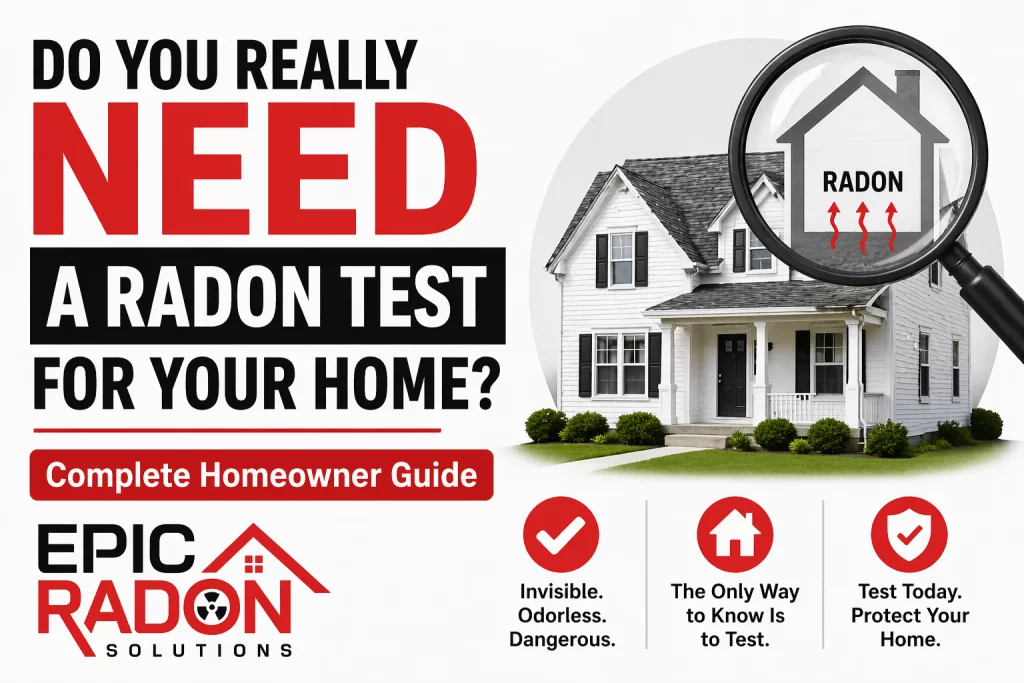
Do You Really Need a Radon Test?
Yes, every home should be tested for radon.
Radon is a radioactive gas that can cause lung cancer, and testing is the only way to know if your home is safe. Even new homes and well-built properties can have dangerous levels.
What Is Radon?
Radon is a naturally occurring radioactive gas formed from the breakdown of uranium in soil, rock, and water.
It enters homes through:
- Cracks in foundations
- Basement floors
- Sump pumps
- Gaps around pipes
You cannot see, smell, or taste radon. That is why it often goes undetected for years.
Why Radon Testing Matters
Radon exposure is a serious health risk.
- It is the number one cause of lung cancer among non-smokers
- It is the second leading cause of lung cancer overall
- It causes about 21,000 deaths every year in the United States
There is no completely safe level of radon exposure. Even lower levels carry some risk over time.
The only way to know your risk is to test your home.
How Radon Testing Works
Here’s how it works in simple terms:
1. Place a Test Device
A radon test kit or monitor is placed in the lowest livable area of your home.
2. Measure Over Time
- Short-term tests: 2 to 7 days
- Long-term tests: 90 days or more
3. Get Results
Results are measured in picocuries per liter (pCi/L).
4. Compare to EPA Guidelines
- 4.0 pCi/L or higher: Take action immediately
- 2.0–4.0 pCi/L: Consider mitigation
5. Take Action If Needed
Mitigation systems can reduce radon levels by up to 99 percent.
When Should You Test Your Home?
You should test your home in the following situations:
- If your home has never been tested
- Before buying or selling a property
- After renovations, especially basement work
- Every 2 years for ongoing safety
- During winter, when windows are closed for more accurate results
The EPA and health agencies recommend testing all homes below the third floor.
Why Every Home Is at Risk
Radon is not limited to certain homes.
It can be found in:
- New or old houses
- Homes with basements or slabs
- Well-sealed or drafty buildings
Any home in contact with the ground can have elevated radon levels.
This is why testing is essential, regardless of your home’s condition.
DIY vs Professional Radon Testing
DIY Test Kits
- Low cost and easy to use
- Available in hardware stores
- Suitable for initial screening
Professional Testing
- Uses calibrated, high-accuracy equipment
- Provides more reliable results
- Required for real estate transactions
Accuracy matters when making health decisions. Professional testing reduces uncertainty.
What Happens If Your Levels Are High?
If your test result is 4.0 pCi/L or higher, action is recommended.
The most effective solution is a mitigation system that:
- Creates negative pressure beneath the home
- Prevents radon from entering
- Safely vents gas outside
Proper systems can significantly reduce long-term exposure risk.
Why Professional Mitigation Matters
Radon mitigation is not just installation—it is engineering.
A properly designed system:
- Targets the entire foundation area
- Maintains consistent airflow
- Operates continuously for protection
Poorly installed or DIY systems may not reduce radon effectively.
Professional mitigation ensures:
- Correct system design
- Reliable performance
- Verified results after installation
Frequently Asked Questions
Yes. Long-term exposure increases lung cancer risk significantly.
Yes. Radon can affect homes of any age or construction type.
Short-term tests take a few days. Long-term tests take several months.
The EPA recommends action at 4.0 pCi/L or higher.
Yes. Weather, seasons, and structural changes can affect levels.
Yes. Radon levels vary from one home to another.
Yes. Proper systems can reduce radon levels by up to 99 percent.
Get a Professional Radon Assessment
Radon exposure is not something to delay. The longer it goes untested, the greater the risk to your health.
Epic Radon offers fast, professional testing and custom mitigation systems—often with same-day service and rapid turnaround to reduce dangerous levels quickly.
Get clear answers, take action, and protect your home before exposure continues.